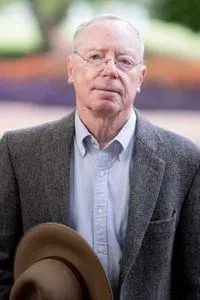
The Department of Philosophy is deeply saddened to share that John Heil, Emeritus Professor of Philosophy at Washington University in St. Louis, died peacefully, surrounded by family, on October 27, 2026, at the age of 83.
John was one of the leading metaphysicians and philosophers of mind of his generation. His early work focused on perception, cognition, and the nature of mind. Books in this period included Perception and Cognition (University of California Press, 1983) and The Nature of True Minds (Cambridge University Press, 1992). In 1993, he and Alfred Mele published an edited collection on Mental Causation (Oxford University Press) that was, for many in the field, a north star in discussions of the place of mind in the causal structure of the world. His textbooks Philosophy of Mind: A Contemporary Introduction, first published in 1998 with its fifth edition now in press with Routledge, and First Order Logic: A Concise Introduction (Wadsworth Press), have introduced generations of students to the field.
Following the Australian American philosopher C.B. Martin, whom he admired and emulated, John emphasized the need to be “ontologically serious,” to resist the urge to confuse facts about explanation, the organization of science, or epistemology with facts about the structure of reality. In the service of that aim, his later works pursued metaphysical questions beyond the philosophy of mind. He developed an ontology of substances, properties, and powers in a series of books: From an Ontological Point of View (Oxford, 2003), The Universe as We Find It (Clarendon, 2012), Relations (Cambridge, 2021) and Appearance in Reality (Oxford, 2021). Writing in plain English with short, pointed chapters, John was a master of a kind of clarity and pithiness that inspired his students and colleagues and that demanded intellectual response.
John joined the philosophy department and Philosophy-Neuroscience-Psychology Program at Washington University in 2004 after nearly two decades at Davidson College, where he held the Paul B. Freeland Professorship and chaired the philosophy department. Earlier in his career he taught at Randolph Macon Women’s College and Virginia Commonwealth University. In recent years, he also concurrently held a professorship at Durham University and was an Honorary Research Associate at Monash University. At Washington University, he twice served as an interim director of the Philosophy-Neuroscience-Psychology program. His work was recognized with a Guggenheim Fellowship (2018-19), a Fulbright Fellowship (2019-20), and by his election as a Corresponding Fellow of the Australian Academy of the Humanities (2020).
Members of the department will remember that John worked in his office daily, including Sundays (when he would wear a tie). His door was always open, and one could find him intently typing at his desk. They will also remember that he, his wife of 46 years, Harrison, and their family, warmly hosted the department in their home for departmental parties and welcome events. And they will remember him running through Forrest Park on his morning jogs.
John invited conversations with students and faculty alike and would follow them up with emails working through the ideas, often illustrated with simple and clear examples: four match sticks composing a square, angels constructing the universe from sub-atomic particles, or (calling on his love of baseball) a short stop and a second baseman turning a double play. John often left his interlocutors with greater confidence in their own intellectual abilities and insights, and he instilled in them heightened enthusiasm for working out the answers. He maintained contact with his students long after they left Washington University and took an active role in their research development. As a director of NEH seminars, an editor for Philosophical Quarterly, and the first editor for the Journal of the American Philosophical Association, he worked tirelessly to shepherd the kinds of philosophy he loved.
A dedicated servant to the department, the University, and the profession, John will be deeply missed by all of us fortunate enough to have known him. A family obituary can be found here.